
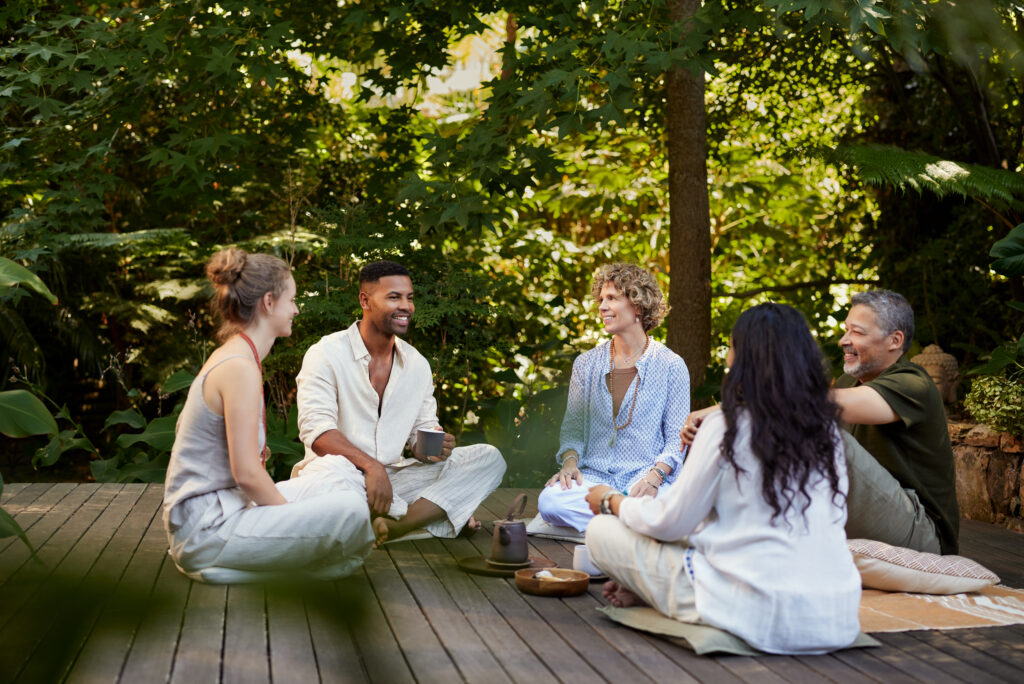
Stepping into a breathwork training retreat brings up natural questions. You might wonder if you will lose control, how your body will react, or whether the method relies on solid research. Many therapists and seekers share these exact thoughts before their first experiential module.
Grof Breathwork uses focused breathing and evocative music to access non-ordinary states of consciousness without drugs. The process draws on decades of clinical observation. It offers a structured way to release trauma, process grief, and learn facilitation skills firsthand.
The Science Behind Experiential Breathwork
Many people assume altered states require pharmaceutical compounds. Heavy breathing alters blood chemistry by temporarily lowering carbon dioxide levels. This shift reduces activity in the brain’s default mode network, similar to deep meditation or psilocybin.
When the default mode network quietens, conscious defense mechanisms soften. Unconscious memories, physical tension, and suppressed emotions surface naturally.
Stanislav Grof and the Cartography of the Psyche
Dr. Stanislav Grof spent over 50 years researching non-ordinary states. His framework extends beyond traditional psychology. He mapped three distinct levels of the human mind:
- Biographical: Unresolved childhood experiences and personal life events.
- Perinatal: Physical and emotional memories connected to birth and pre-natal life.
- Transpersonal: Experiences beyond personal identity, connecting to ancestral, archetypal, or collective content.
This cartography shows that physical symptoms often root in deep emotional layers. Breathwork helps people process these layers safely without relying on verbal talk therapy alone.
Psychedelic Retreat Expectations vs. Breathwork Realities
It is easy to confuse breathwork modules with psychedelic retreats. While both alter awareness, breathwork keeps you in control. You choose how deeply you breathe, and you can pause the intensity by slowing your breath at any point.
| Feature | Grof Breathwork Retreat | Psychedelic Retreat |
| Primary Mechanism | Accelerated breathing and evocative music | Exogenous compounds (Psilocybin, MDMA, etc.) |
| Control Level | High (Intensity regulated by breath speed) | Fixed (Duration set by substance metabolism) |
| Legal Status in Canada | Fully legal across all provinces | Subject to Health Canada regulations or exemptions |
| Primary Goal | Somatic release and facilitator training | Therapeutic breakthroughs or clinical trials |
Breathwork provides a non-pharmacological entry point for health professionals in Canada. It offers direct experience with non-ordinary states while avoiding regulatory uncertainty.
Your Daily Schedule at an Experiential Training Retreat
A training module balances theory, practical experience, and rest. Small groups work in dedicated spaces designed for physical comfort and complete privacy.
| Time | Activity | Purpose |
| 08:00 AM | Morning Prep & Group Intention | Grounding and setting expectations |
| 09:00 AM | Breathing Session 1 (Group A Breathes / Group B Sits) | 3-hour deep session |
| 12:00 PM | Mandala Creation & Silent Integration | Expressing experience through art |
| 01:00 PM | Group A Sharing Circle | Grounding verbal processing |
| 02:30 PM | Lunch & Extended Rest | Digestion and nervous system recovery |
| 04:30 PM | Breathing Session 2 (Group B Breathes / Group A Sits) | 3-hour deep session |
| 07:30 PM | Mandala Creation & Dinner | Quiet transition and nourishment |
| 08:30 PM | Group B Sharing Circle & Evening Closing | Final integration for the day |
Preparation and Intention Setting
Each day starts with group discussions. Facilitators review safety guidelines, answer questions, and explain energy release techniques.
Participants set personal intentions rather than specific goals. An intention acts as an anchor without forcing the experience in a rigid direction.
The Breathing Session and Sitter Dynamics
Participants split into pairs: one “breather” and one “sitter.” This dynamic forms the core of Grof training.
- The Breather: Lies on a comfortable mat with eyes closed. They breathe faster and deeper while listening to a structured music playlist.
- The Sitter: Stays present beside the breather, offering focused, non-judgmental support. They assist with simple needs like offering water or tissues.
- The Facilitator: Oversees the room, steps in for complex emotional processing, and ensures physical safety.
This setup teaches future practitioners how to hold space without interfering. Sitters learn to trust the inner wisdom of the person on the mat.
Somatic Integration and Mandala Artwork
After a two-to-three-hour session, breathers transition to a quiet art room. Words often fail after intense experiences, so participants draw mandalas within a pre-drawn circle.
Drawing translates raw non-verbal emotions into visual shapes. This step bridges the gap between unconscious material and conscious thought.

Safety, Legal Structure, and Screening in Canada
Safety is the top priority at any accredited training retreat. Grof® Breathwork is non-pharmacological and fully legal across Canada. However, intense breathing creates real physical changes that require thorough screening.
Health protocols require clear assessments before attendance. Key considerations include:
- Cardiovascular Health: High blood pressure or heart conditions require medical clearance.
- Pregnancy: Accelerated breathing is not recommended during pregnancy.
- Psychiatric History: Conditions like schizophrenia or bipolar disorder need careful review to ensure a safe setting.
Facilitators monitor the room constantly. They use bodywork techniques to help clear physical blockages when emotional releases stall.
Who Benefits Most From Experiential Facilitator Training?
Experiential retreats serve health professionals, counselors, and individuals seeking deep growth. You cannot guide someone through unconscious terrain without walking through your own first.
Practitioners gain several key skills during training:
- Experiencing non-ordinary states firsthand to build genuine empathy for clients.
- Learning non-directive facilitation skills that honor the client’s inner direction.
- Mastering somatic techniques to release stored trauma safely.
- Practicing crisis intervention and emotional grounding methods.
If you want to step into this work, review our training programs to find upcoming modules across Canada.
How Integration Turns Experiences Into Lasting Change
An intense session is only the starting point. Real growth happens during integration—the process of weaving insights into daily life.
Without proper integration, powerful realizations fade quickly. Training retreats teach practical steps to anchor these insights:
- Journaling: Write down feelings, dreams, and physical shifts without judging them.
- Body Awareness: Use yoga, gentle stretching, or nature walks to ground emotional energy.
- Peer Support: Connect regularly with your training cohort to process ongoing shifts.
- Professional Guidance: Work with an integration coach or therapist to process lingering discoveries.
Transformative work aims to reduce internal friction and end personal suffering. To understand how letting go of mental resistance brings lasting peace, read this analysis on spiritual liberation and ego suffering.
If you are ready to expand your practice, read more about our lineage and see how Grof Breathwork can transform your clinical work.
FAQs
Is breathwork legal in Canada?
Yes. Grof® Breathwork uses natural breathing techniques and music to alter consciousness without pharmaceuticals. It is completely legal across all Canadian provinces and territories.
What if I panic during a breathing session?
Trained facilitators and dedicated sitters remain beside you throughout the entire session. You can reduce your breathing pace at any time. Facilitators also use grounding techniques to help you feel safe and stable.
Do I need prior therapy experience to join a retreat?
No prior background is required for foundational personal growth modules. However, health professionals and practicing therapists often use these retreats to earn professional facilitation credentials.
How does breathwork compare to psilocybin retreats?
Breathwork produces similar emotional and somatic releases without using drugs. Because you control the depth of your breath, you maintain control over the intensity and duration of your journey.
What should I bring to a training retreat?
Bring comfortable clothing, a water bottle, a journal, and an open mind. The academy provides mats, blankets, art supplies, and all necessary training materials.