
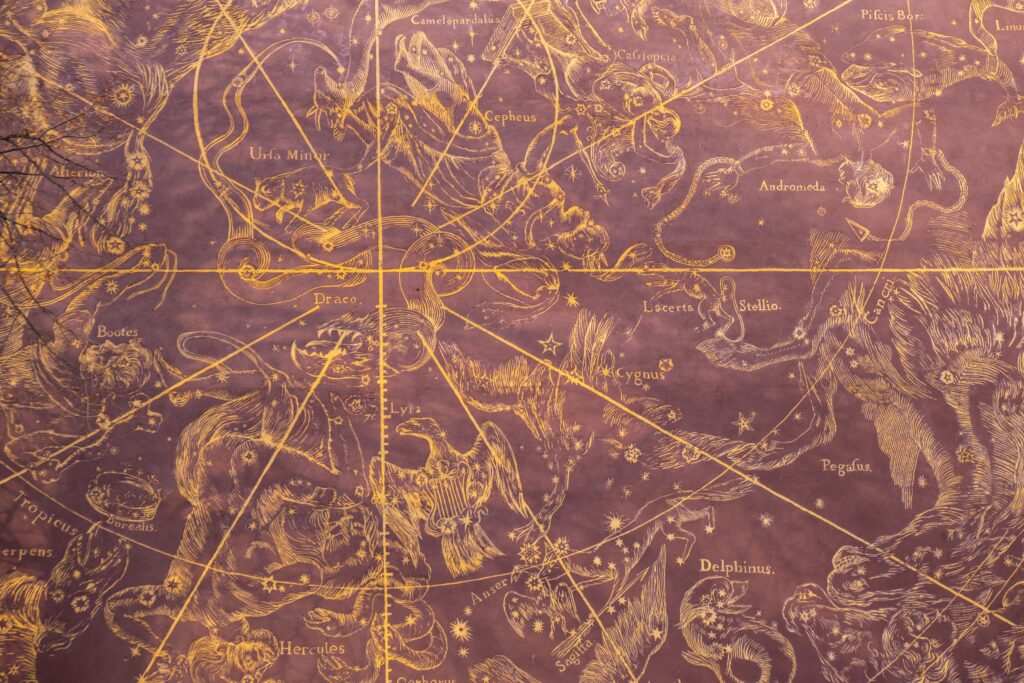
When practitioners face an unpredictable journey in the treatment room they often look for answers in the dosage or the setting. While these factors matter they rarely explain why a person experiences a specific mythic theme at a specific time. This is where the study of astrology enters the clinical space.
Far from the simplified horoscopes found in daily newspapers, archetypal astrology is a rigorous discipline. It examines the correlation between the positions of planets and the patterns of human experience. For those in the Grof lineage this isn’t a matter of belief but a matter of empirical observation spanning over fifty years.
The Connection Between Planetary Alignments and the Psyche
Stanislav Grof and historian Richard Tarnas discovered a consistent link between a person’s “cosmic weather” and their internal breakthroughs. They found that when certain planets move into specific angles with a person’s birth chart the unconscious mind opens in predictable ways. This connection between planetary alignments and the psyche allows facilitators to move away from the “stuck” clinical model that views all difficult experiences as pathology.
Instead of seeing a client’s sudden encounter with grief as a random setback we can look at the transits. Often we find a Saturn alignment at play. This knowledge changes the tone of the session from one of crisis management to one of purposeful transition.
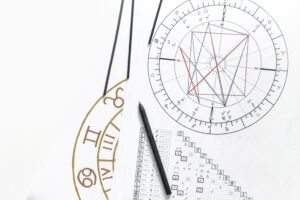
Why Timing is Everything in Transpersonal Work
In the Canadian therapeutic community we are seeing a shift toward more holistic views of mental health. Practitioners are realizing that the “when” of a session is just as vital as the “what.” If a client is in a period of high tension they might be more likely to encounter the “No Exit” phase of the Perinatal Matrices.
This is the fear of “bad timing” that many beginners feel. They worry they will be overwhelmed by their own minds. Using an archetypal lens provides a sense of order. It shows that even the most difficult sessions have a beginning, a middle and an end based on natural cycles.
Moving Beyond the Clinical Ceiling
Traditional Western medicine often hits a ceiling when dealing with transpersonal or spiritual experiences. When a patient describes feeling a connection to a Greek god or a universal force a standard clinician might reach for a sedative. In the Grof method we reach for the ephemeris.
Understanding these cycles helps the practitioner stay grounded when the journey turns mythic. It provides a vocabulary for the “Unpredictable Journey.” When we can name the archetype—whether it is the structure of Saturn or the liberation of Prometheus—the experience becomes less frightening.
The Four Archetypal Powers in Therapy
To understand how this looks in practice we can observe four primary archetypal forces. These are not distant planets but psychological “gods” or principles that reside within us.
- The Saturnian Principle This archetype represents limits, boundaries, and the material world. In a psychedelic session a Saturn transit often manifests as a feeling of being trapped or facing old age and death. This is closely tied to the second Basic Perinatal Matrix (BPM II) where the womb is contracting and there is no way out.
- The Uranian Principle Uranus brings sudden change and liberation. When this planet is active the journey tends to be fast-paced and rebellious. It is the energy of the breakthrough. It shatters old patterns and allows the individual to see life from a radically new perspective.
- The Neptunian Principle Neptune governs the mystical and the boundless. These sessions are often filled with beautiful visions of oneness or the feeling of being in a cosmic ocean. While beautiful this energy can also be confusing or “watery” making integration a slower process.
- The Plutonian Principle Pluto is the archetype of death and rebirth. It is the most intense of all the forces. It brings up the deepest biological and ancestral trauma. When Pluto is in transit the session will likely involve a profound “ego death” followed by a powerful sense of renewal.
Practical Application for Practitioners
If you are a facilitator you don’t need to be a professional astrologer to benefit from this. Simply knowing the current “collective transits” can help you prepare for a group session. For instance if the collective is experiencing a hard Saturn-Pluto aspect you can expect the group energy to be heavy and intense.
This level of preparation is taught in our certification programs. We move beyond the basics to show how these maps can be used to protect the client. When a person knows their pain has a cosmic purpose they can endure it with more grace.
The Research Behind the Stars
Richard Tarnas’s work in Cosmos and Psyche provided the academic backbone for this approach. He tracked historical events and individual biographies against planetary cycles. The correlations were so precise they could not be dismissed as coincidence.
In the world of professional astrology there are many advanced techniques such as zodiacal releasing. While these are complex they show that the timing of a life “unfolding” is rarely random. You can read more about how experts like Julia Child have had their careers mapped through these methods to see the precision involved.
Integration: Bridging the Worlds
The goal of using astrology in therapy is always integration. We don’t look at the stars to escape the earth. We look at them to understand our earthly problems better. A “bad trip” is often just a session that occurred during a difficult transit that the person wasn’t prepared for.
When we integrate a session using archetypal language the client feels seen on a deep level. They feel that their struggle is part of a universal story. This reduces the isolation that often follows a deep psychedelic experience. It turns a “strange vision” into a meaningful step on a lifelong path.
A New Standard for Canadian Clinics
As we look toward the future of psychedelic therapy in Canada the demand for depth will only grow. Clients are no longer satisfied with simple symptom relief. They want to understand the meaning of their lives.
By incorporating archetypal timing into your practice you offer a level of care that is both ancient and cutting-edge. It is a way to honor the mystery of the psyche while maintaining clinical excellence. If you are ready to expand your toolkit we encourage you to contact us for more information on our upcoming modules.
FAQs
Is this the same as a daily horoscope? No. Archetypal astrology is a depth psychology tool. It does not predict “meeting a tall stranger” but rather describes the quality of the psychological archetypes that are currently active in your unconscious mind.
Do I have to believe in astrology for it to work? The correlations exist whether you believe in them or not. Many of our most skeptical students have become convinced after seeing their own “unpredictable journeys” perfectly match their planetary transits.
Can astrology prevent a “bad trip”? It cannot prevent difficult material from coming up because that material often needs to be processed for healing. However it can provide the context that prevents a “bad trip” from becoming a traumatic one by explaining the purpose of the intensity.
How do I find out my current transits? You can use various software or consult with an archetypal astrologer. In our training we teach facilitators how to read basic transit charts to help prepare their clients for sessions.
Is this used in Ketamine-Assisted Therapy? Yes. Any state where the ego is relaxed allows these archetypal patterns to come to the surface. Many KAP practitioners find that astrology helps explain why two different sessions with the same dose can feel so different.