
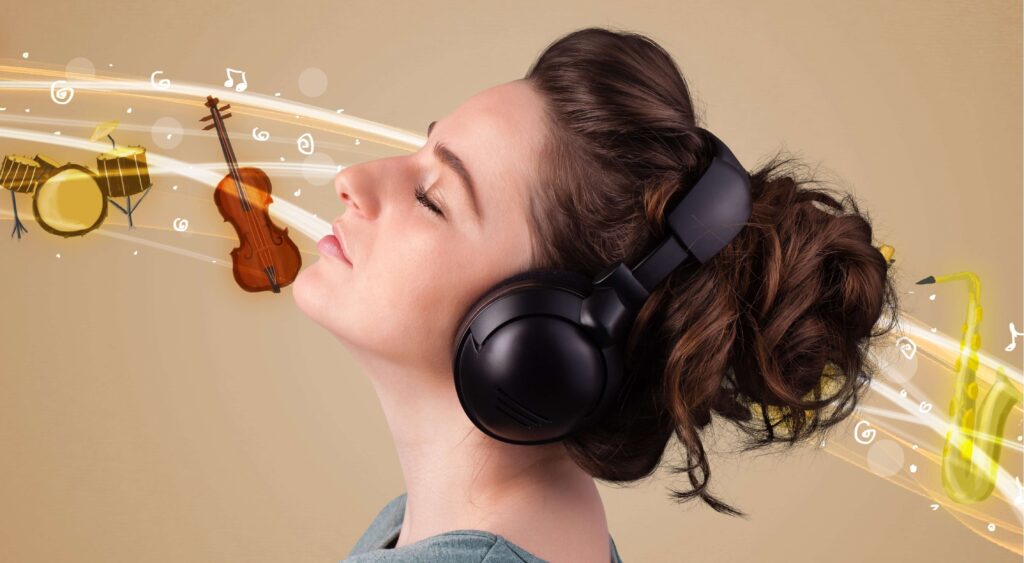
When you enter a Holotropic Breathwork session the first thing you notice is the volume. This is not the gentle ambient sound found in a typical yoga class. It is a powerful, immersive force. For the “stuck” practitioner or the over-intellectualizer, this sound serves a vital purpose. It acts as a bridge between the conscious mind and the deeper layers of the unconscious.
Stanislav Grof, the co-creator of this method, recognized that music has been used for millennia in indigenous cultures to facilitate healing. In the Grof tradition, we use specific sequences of sound to mirror the internal journey of the breather. This isn’t just about melody; it is about the therapeutic use of sound in breathwork to move energy that words cannot reach.
Why the Intellectual Mind Fails in Healing
Many people come to our training academy because they have “talked their problems to death” in traditional therapy. They understand their trauma intellectually, yet they still feel the weight of it in their bodies. This is because the neo-cortex—the part of the brain responsible for logic and language—often acts as a gatekeeper. It protects us by suppressing painful memories.
Music at a high volume and specific frequency disrupts this gatekeeping. It saturates the senses, making it difficult for the ego to maintain its usual grip on reality. When the “thinking” brain is occupied by the complexity of the sound, the emotional brain (the limbic system) is free to express itself. This is where true shifts happen.
The Three Phases of the Music Protocol
The structure of a Holotropic Breathwork music set is based on decades of clinical observation. It follows a predictable arc that matches the biological and psychological rhythm of a deep emotional release.
- The Opening Phase: Rhythmic and Driving The first hour of a session features music with a strong, consistent beat. Think of indigenous drumming or heavy tribal rhythms. This serves to build “charge” in the body. It encourages the breather to move past the initial resistance or boredom that often crops up at the start of a session. The rhythm synchronizes the breath and begins the process of shifting consciousness.
- The Breakthrough Phase: Dramatic and Peak Emotional As the session progresses, the music shifts into what we call “peak” music. This often includes powerful orchestral pieces, choral arrangements, or intense soundtracks. The goal here is to provide a container for the most difficult emotions. If a breather is touching upon a “death-rebirth” experience, the music must be large enough to hold that intensity. It provides the courage to face what feels overwhelming.
- The Integration Phase: Soulful and Meditative In the final third of the session, the intensity drops. The music becomes more melodic, airy, and peaceful. This phase is crucial for “landing” the experience. It allows the individual to begin the process of weaving their insights back into their sense of self. It provides a sense of sanctuary after the storm of the breakthrough.
The Danger of Random Playlists
For practitioners who feel “stuck,” the issue often lies in their music selection. Creating a set for non-ordinary states is a specialized skill. Using a random Spotify playlist can be counterproductive or even harmful. If the music drops in intensity just as a client is reaching a breakthrough, it can leave them in a state of “unresolved tension.”
Professional training teaches you how to read the room and select sounds that support rather than distract. We focus on music that is “non-suggestive.” This means avoiding songs with lyrics in a language the breather understands, as words trigger the analytical mind. We want the psyche to project its own meaning onto the sound.
Healing Through the Body
While we often focus on the mind, sound is a physical vibration. It hits the skin and the internal organs. This is why sound therapy has become a mainstream topic, even appearing in publications like Vogue regarding the rise of sound baths. However, Holotropic music goes deeper than a standard sound bath. It is designed to provoke, not just relax.
For the skeptical beginner, it helps to view the music as a coach. When your breath falters or you feel scared, the music carries you. It provides a rhythmic “track” to follow when you don’t know where to go next. It is the engine of the experience, while the breath is the fuel.
The Role of the Facilitator in Curation
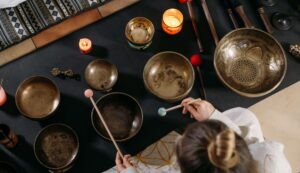
A Grof-certified facilitator spends hundreds of hours learning the nuances of sound. They learn how to identify “heart-opening” music versus “grounding” music. They understand the cultural origins of the tracks they use and ensure they are used with respect.
If you are a therapist or a wellness professional, adding this tool to your kit can be the difference between a client who stays in their head and a client who has a life-changing epiphany. Understanding the architecture of sound is just as important as understanding the architecture of the psyche.
How to Transition into Professional Practice
If you find yourself curious about how to implement these tools safely, education is the first step. The field of psychedelic-assisted therapy and breathwork is growing rapidly in Canada. Ensuring you have a foundation in the Grof lineage provides you with a map that has been tested for over fifty years.
Whether you are looking to become a facilitator or simply want to deepen your own personal practice, understanding the “why” behind the music is essential. It moves the practice from a “cool experience” to a rigorous therapeutic modality.
FAQs
Why is the music so loud in Holotropic Breathwork? The volume is intentional. It is designed to overwhelm the physical senses just enough to quiet the internal monologue. This allows the breather to focus entirely on their internal imagery and sensations without being distracted by outside noises or their own wandering thoughts.
Can I use my own favorite songs for breathwork? It is generally discouraged to use music you already know and love. Familiar songs carry specific memories and associations that can “tether” you to your everyday life. The goal of Holotropic music is to provide a “blank canvas” so your unconscious can paint its own pictures.
What happens if I don’t like the music? Disliking the music can actually be a part of the process. In the Grof method, any irritation or resistance is seen as “grist for the mill.” Often, the music we find most annoying is the music that is hitting a specific emotional blockage we are trying to avoid.
Is Holotropic music the same as Binaural Beats? No. While binaural beats use specific frequencies to shift brainwaves, Holotropic music uses emotional resonance and narrative structure. It is a more complex, artistic, and evocative approach that addresses the “whole person” rather than just brainwave patterns.
How do I learn to build these music sets? Building a set requires an understanding of the Perinatal Matrices and the arc of a session. Our certification programs provide the technical and psychological training needed to master this art.